The DPP is intended to create transparency across the entire product lifecycle—from material composition and carbon footprint to repair and recycling information.
Regulatory Status
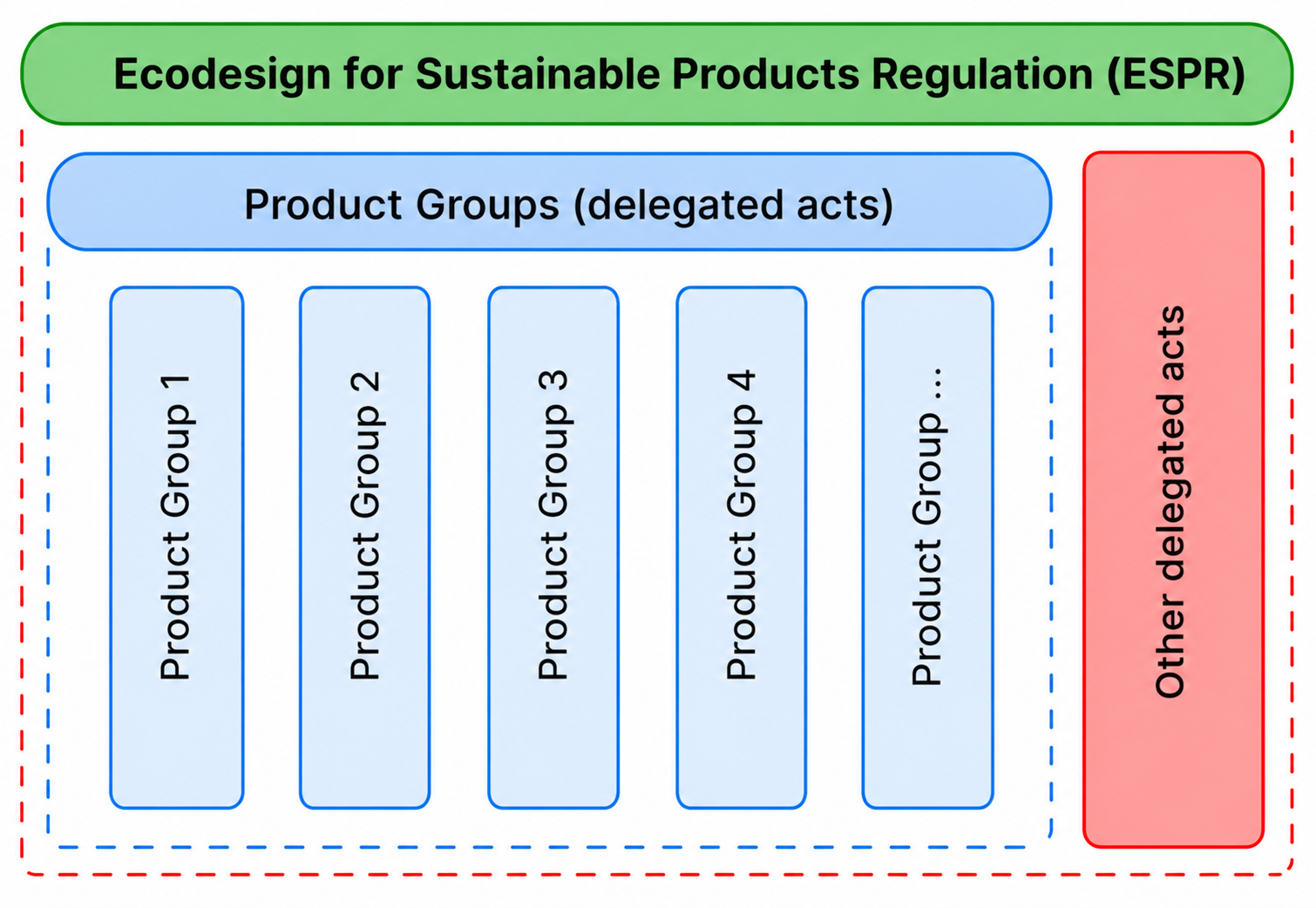
The legal basis for the DPP is found in the ESPR (Ecodesign for Sustainable Products Regulation), which entered into force in July 2024. As a framework regulation, it will be supplemented in the future by product-specific delegated acts for various product groups (textiles, iron and steel, aluminum, tires, furniture, etc.). In addition, further horizontal requirements, such as the technical representation of the DPP, are established:
In addition to the ESPR, there are other EU regulations that require a DPP now or in the future, in particular:
- Battery Regulation
- New End-of-Life Vehicles Regulation (draft)
- Regulation on Detergents and Surfactants
- Toys Regulation
- …
The first mandatory applications will take place starting in February 2027 as part of the battery pass system. The expansion to other sectors, including textiles, furniture, electronics, and construction products, will occur gradually through 2030.
Next Steps for Companies
For companies, the focus is now less on whether a DPP will be introduced and more on how the existing data landscape can be made “DPP-ready.”
Step 1: Analyze impact & relevance
- First and foremost, companies should understand which of their product groups are directly affected by DPP requirements, to what extent customers are requesting DPP data, and what additional sustainability and compliance requirements exist under other legislation.
Step 2: Conduct a data inventory and GAP analysis
- Once the data to be provided has been determined, a comparison must be made with the company’s existing data. The identified data gaps must then be prioritized, and data owners designated.
Step 3: Define the target architecture
- In addition to the DPP content, the method of data transmission also plays a central role. Here, one should follow the delegated acts issued by the EU as well as those from mandated bodies, such as JTC 24.
Step 4: Initiate a pilot project & involve suppliers
- It is recommended to start with a portion of the product portfolio that is already characterized by high data availability and is of significant strategic importance. Additionally, the relevant suppliers for the product group in question can already be considered. In this context, it should be determined which data must be available and in what format.
In which areas can tec4U-Solutions support you now or in the future?
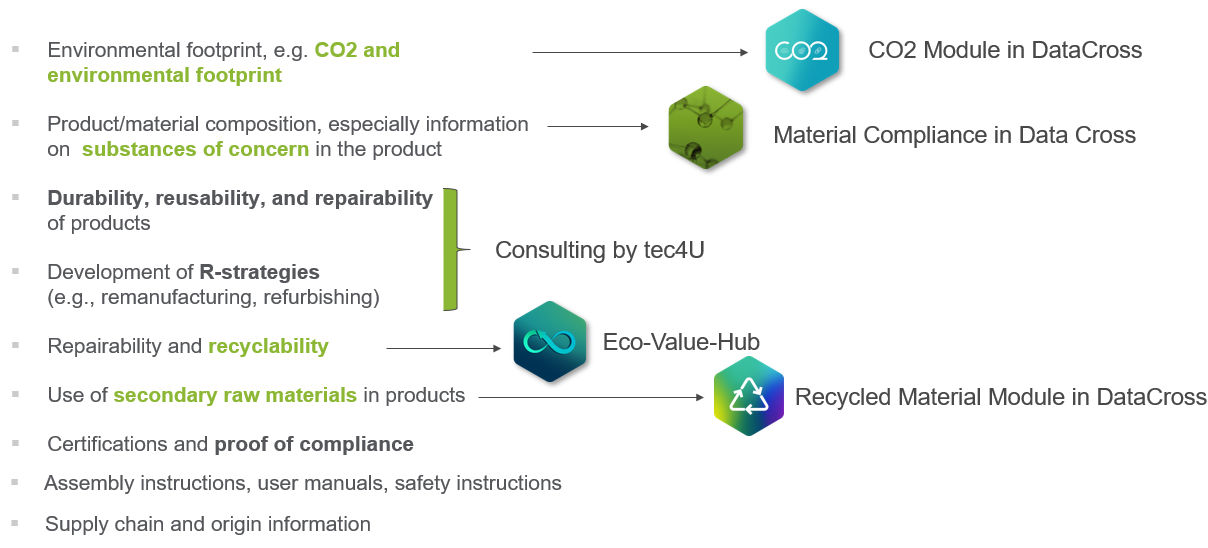
The biggest challenge in the context of DPP lies less in the technology and more in the companies’ data situation. Some data already exists and simply needs to be compiled. In other areas, data must first be obtained. This is where our sustainability software DataCross comes in:
For companies, this means: The DPP should not be viewed as a mere compliance project. The real challenge lies in the availability, quality, and integration of product and supply chain data.
Those who harmonize their data landscape early on and systematically involve suppliers lay the foundation for the efficient implementation of future requirements.

Gülistan Dar, Betriebswirtin (M.A.)
Gülistan Dar is Head of Corporate Compliance at tec4U-Solutions GmbH, a provider of digital sustainability solutions. She has been working on ESG issues for several years, both in customer projects, process consulting, workshops, and training courses. Her focus is on the practical implementation of the requirements of CSRD, VSME, eco-design (digital product passport), and the EU Taxonomy Regulation. She is trainer for the TÜV courses “Material Compliance Officer” and “CSRD Officer,” gives specialist lectures, and writes articles for industry magazines.